From a hostel room canteen to a Himalayan StonedAge TOSH, to Dehradun’s first art café — the story of building Musee Living, one impossible space at a time.
Before i start, Same Q – why i am writing this one ?
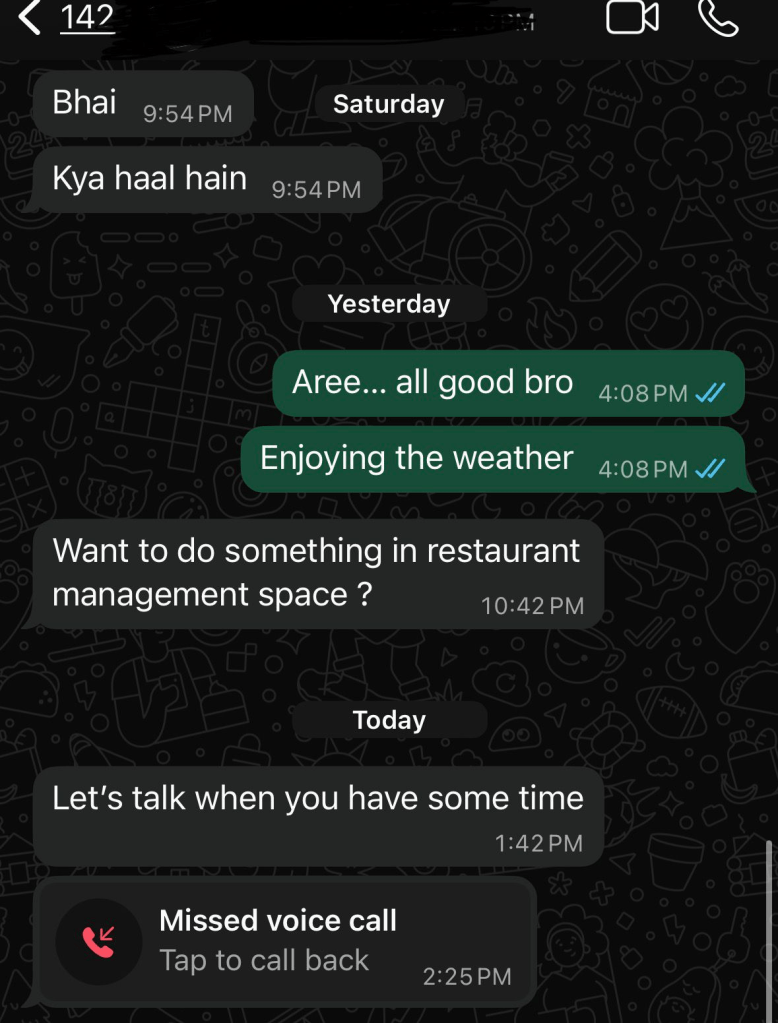
Ans : Because, i keep getting these DMs…. here in 2026 too
I’ve spent 20 years learning that the right conditions never arrive. You build anyway — and the conditions catch up. Most people wait for the right conditions. The right location. The right funding. The right moment, a.k.a. the enthusiasts
This is the story of everything I’ve built. Not the polished version. The real one.
2006 — The Canteen That Wasn’t Supposed to Exist
It started with hunger. Not metaphorical hunger. Actual hunger, at 11 pm, in a college hostel with no options.
Every canteen shut at 10. Every night, the same thing — a corridor full of late-nighters with nowhere to go and nothing to eat.
So I opened my room.
No menu. No license. No business plan. Just a door that stayed open when everyone else’s had closed.
Word spread the way it always does in hostels — fast and without your permission. I moved things around, found a little extra space, stayed open later. What I was running, without knowing it, was my first hospitality venture.
The insight wasn’t about food. It was about this: there is always a gap between what people need and what exists. And if you’re willing to be uncomfortable, you can fill it.
That instinct has driven everything since.
2016 — StonedAge Tosh, Himachal Pradesh
3 km past the last road. Built from the earth itself.
Ten years later, I found myself standing at the edge of a mountain in Tosh — a village most maps don’t bother labeling — asking a question that most people would have answered with “this is impossible.”
Can I build something here?
The answer required six months of digging dirt, hauling stone, sourcing timber, and solving problems that don’t have Google answers. The last motorable road ends 3 kilometres before the property. Everything — materials, equipment, supplies — had to be carried in on foot or on mules through mountain terrain.
I didn’t build StonedAge. I excavated it. http://www.stonedage.in
The structure is stone and wood — ancient materials that belong to that landscape. It looks like it grew there. It was always meant to be there. We just had to uncover it.
What I learned building in the Himalayas is something no MBA teaches: difficulty is a filter, not a barrier. The guests who arrive at StonedAge after that 3 km walk, breathless and cold and disoriented, don’t just check in. They exhale. The journey earns the arrival.
StonedAge is the hardest thing I’ve built. It’s also the one I’m most proud of. Here is the glimpse
If you’re an entrepreneur reading this — find your StonedAge. Find the thing everyone says can’t be done and build it anyway. The market for impossible things is less crowded than you think.
2019 — Musee Art Cafe, Dehradun
Dehradun’s first art café. 500+ artists. 5,000+ artworks. Built for community, not just customers.
Back in the city. But with a different lens of http://www.museeliving.com
Musee Art Cafe was built on a belief that felt obvious to me and strange to everyone else: art shouldn’t live only in galleries, and good food should always come with good ideas.
Dehradun had never seen anything like it — a community space disguised as a restaurant, or a restaurant disguised as a community space. We built it as a platform for local and independent artists to show, sell, and be discovered. Not a gallery with rope barriers. A café where art lives on the walls, changes with the seasons, and is part of the room — not separate from it.
The numbers, five years in:
- 500+ artists featured
- 5,000+ artworks displayed
- Hundreds of events, launches, and community gatherings
Then Covid arrived and took the walls away.
Most hospitality businesses went quiet. We went inward and built Kalacube — an online art marketplace that took everything Musee stood for and made it accessible without a door to walk through. Because artists don’t stop creating when the world stops moving. And we weren’t going to stop supporting them.
For investors and builders: Musee wasn’t just a café. It was a community infrastructure play — creating the kind of space a city returns to, not just visits once. That’s what drives loyalty and longevity in hospitality.
2023 — Kaksh Villa, Sahastradhara
5 rooms. 14 guests. A swimming pool fed by a natural spring. Nothing blocking the view.
By 2023, I understood something clearly: people don’t want more. They want better.
More amenities, more activities, more features — that’s the hotel industry’s default playbook. Kaksh Villa was built against that instinct entirely.
Five rooms. Fourteen guests maximum. A property at Sahastradhara — whose name translates to thousand-fold spring — where the swimming pool is fed by a natural, medicinal spring running 24 hours a day. Cold, clean, continuous. Not a hotel pool that gets chemically treated twice a week. Water that flows the way it was always meant to flow.
The view from Kaksh is something I’ll let guests describe for themselves. What I’ll say is this: we designed it so that from every vantage point, you see only Kaksh and the mountains. No other building. No tower. No noise. No disturbance on the horizon.
People sleep better at Kaksh. I’ve heard this enough times now that I’ve stopped being surprised by it.
For families, small gatherings, and people who have finally learned that a weekend of stillness is worth more than a weekend of activity — Kaksh exists for you.
2025 — Musee Banquet & Events, Dehradun
300 people. A proper stage for the moments that deserve one.
The Art Cafe taught me that people fundamentally want to gather. The banquet was the honest next step.
Musee Banquet & Events is built for 300 — for the weddings, the milestone birthdays, the corporate evenings, the moments that deserve more than a rented hall with borrowed lights and a catering company that doesn’t know your name.
Same philosophy as everything else under the Musee name: space designed with intention. The feeling that someone actually cared before you arrived.
2026 — Ark Inn, Dehradun
16 rooms. A terrace garden. A boutique hotel that feels like it was made for you specifically.
The newest chapter. Still being written.
Ark Inn is a boutique hotel in Dehradun — 16 rooms, a terrace garden, and the kind of scale that allows real hospitality rather than processed hospitality. Small enough to feel personal. Designed well enough to feel special.
It’s the kind of place I’ve always wanted to stay in when I travel and rarely found: where the building has a point of view.
Musee Living — One Vision. Six Properties.
Here’s the thread that connects all of it:
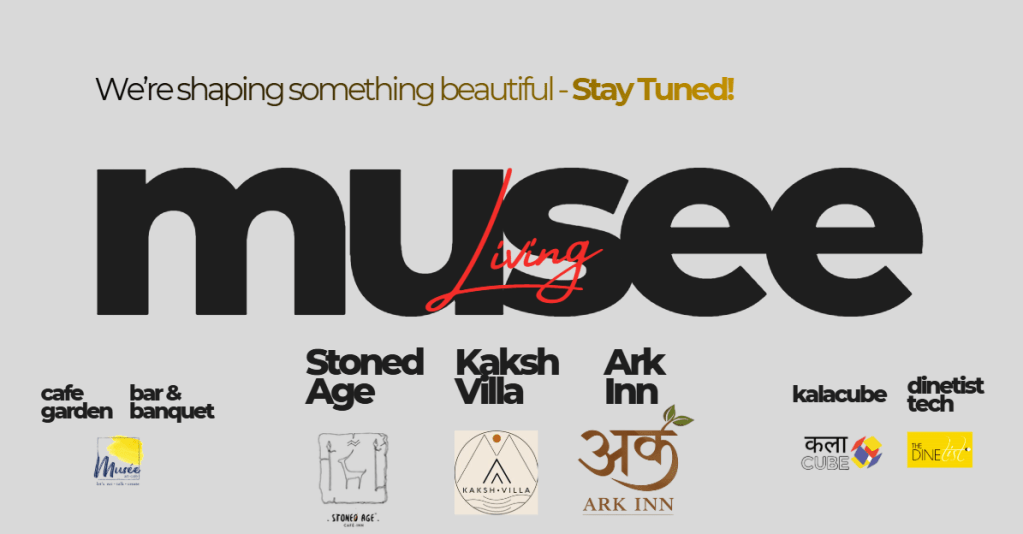
Musee Living is the name I’m bringing everything under — StonedAge, Kaksh, Musee Art Cafe, Musee Banquet, Ark Inn, and what comes next.
Not a hotel chain. Not a franchise. A collection of spaces built around a single belief:
Every place should make the person inside it feel something real.
Each property is different in style, scale, and location. What they share is harder to put in a brochure — an attention to the person who walks through the door. A resistance to the generic. A conviction that hospitality is not a service industry. It’s a feeling industry. More on http://www.museeliving.com
What I’d Tell Anyone Building in This Space
The hospitality industry is crowded with people doing the same thing in slightly different packaging.
The gap — the real gap — is in specificity.
StonedAge works because there is nothing else like it in Tosh. Musee Art Cafe works because there was nothing else like it in Dehradun. Kaksh works because the experience is singular — not manufactured, not replicated, not scalable in the conventional sense.
Specificity is the moat. The more specific your vision, the harder it is to copy and the more loyal the audience it creates.
Build the thing that only you could build. In the place only you would think to build it. For the person that everyone else has forgotten to design for.
That’s the only hospitality strategy that has ever worked for me.
 Y Prateek
Leave a comment