WhatILearnedRunningaCaféat8,000Feet
Most cafés worry about foot traffic. Ours worries about whether the mules made it up before dark.
At 7,874 feet in Tosh, in the upper reaches of Parvati Valley, we run a wood-fire café that sits three kilometres beyond the last motorable road. Every sack of flour, every propane cylinder, every crate of tomatoes arrives the same way the guests do — on foot, up a trail, past a point where Google Maps politely gives up.
I've opened food businesses in cities. I opened my first one in a college hostel corridor at 11 pm. But nothing rewired how I think about hospitality quite like running a kitchen where the nearest supplier is a full day's walk away.
Here's what the mountain taught me.
1. Constraint is the best menu designer you'll ever hire
In a city, you can serve anything. That's the problem. Infinite options produce a bloated menu, a stressed kitchen, and food that's competent but never memorable.
At altitude, the supply chain writes your menu for you. What survives the climb, what stores without refrigeration, what a small team can execute flawlessly on a wood fire — that's your menu. Everything else is a fantasy you'll abandon by week two.
We lean into what the mountain gives us: hot, honest, slow-cooked food that tastes like it belongs to the place. Guests don't come to Tosh for a truffle reduction. They come cold and breathless off a trail, and they want something that makes them exhale. Fewer things, done like they matter, beats more things done adequately. The café proved that to me every single day.
2. The journey is part of the flavour
There's a strange thing that happens when a meal is hard to reach. It tastes better.
Not because the food is objectively superior — because the person eating it earned it. They walked the last three kilometres. They arrived. The chai that follows that walk isn't just chai; it's relief, arrival, reward. We didn't build StonedAge despite the difficult approach. The difficult approach is the product.
If you've read how the whole place came to exist, you'll know we never tried to smooth the edges off getting here. The friction is the feature. It filters for the kind of guest who understands what they're walking into — and it makes the arrival mean something.
3. Your staff aren't staff. They're the whole thing.
You cannot micromanage a café from a day's walk away. You can't rush up when the delivery is late or the fire won't catch. The team that runs the place is the place.
That changes how you hire and how you lead. In a city, you can afford to treat people as interchangeable. On a mountain, one person quitting can close your kitchen. So you build differently — slower, more personally, with more trust and fewer rules. The people who stay aren't there for the wage. They're there because the place means something to them too.
4. Weather is a business partner you didn't choose
Rain closes the trail. Snow closes the season. A landslide can cut you off for days. You learn to plan around a partner who never returns your calls and changes their mind constantly.
The lesson generalises: stop pretending you control the conditions. Build slack into everything — inventory, cash, expectations. The businesses that break are the ones optimised so tightly for perfect conditions that a single bad week ends them. The mountain beats optimism out of you and replaces it with something more useful: preparedness.
5. Specificity is the only moat that holds
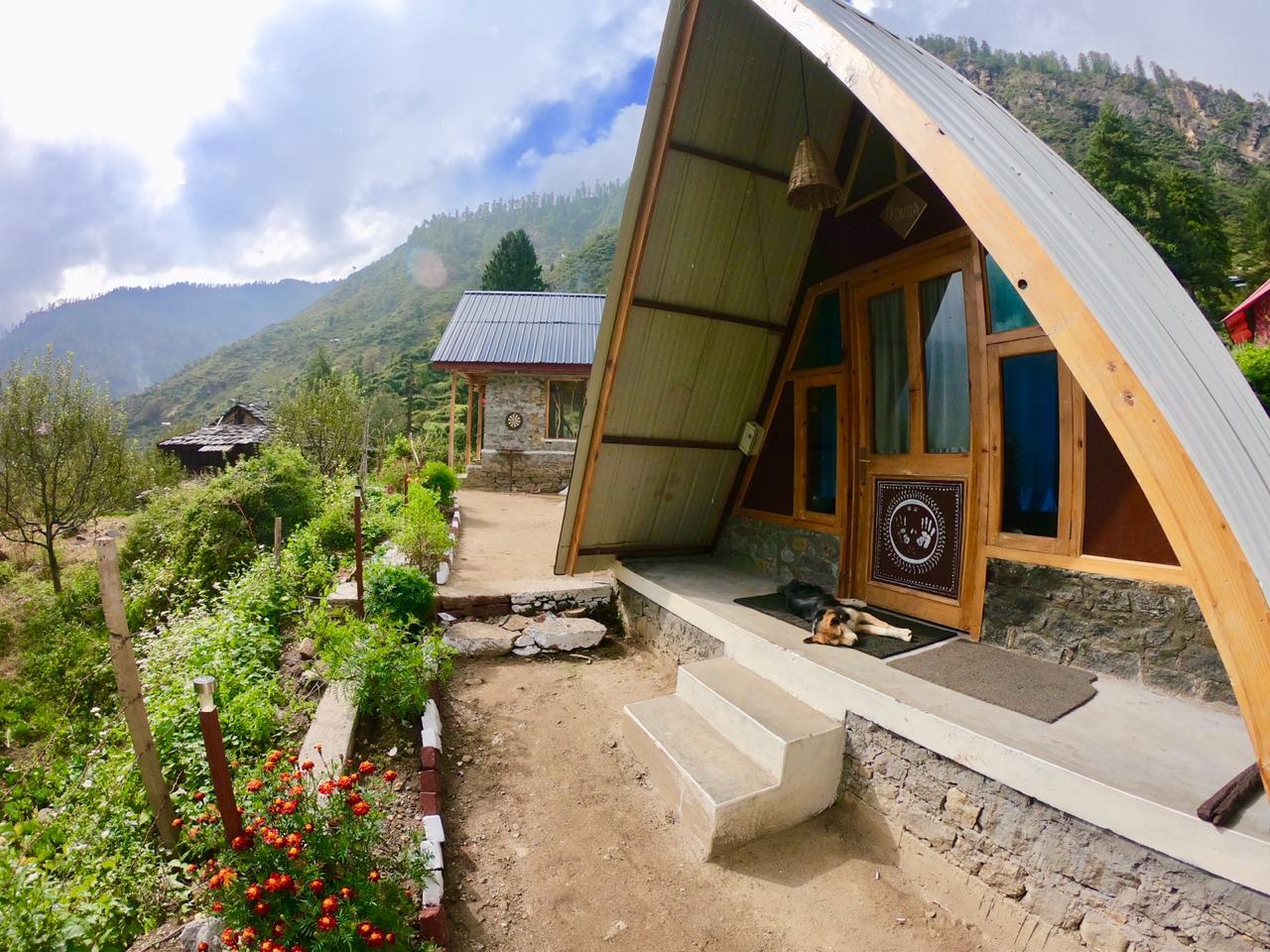
There are a thousand cafés with better espresso machines, faster service, and easier parking. None of them are a wood-fire kitchen three kilometres past the road, under glacier views, wrapped in stone cottages that look like they grew out of the hillside. You can copy a menu. You cannot copy a place.
Everything I've built since — and everything under the Musée Living banner — comes back to that one idea. Don't compete on the axis everyone else is racing down. Build the thing only you would think to build, in the one place nobody else would attempt it.
The café at 8,000 feet isn't a good business by any spreadsheet. It's a great one by the only measure that lasts: nobody can build it twice.
If you ever want to test this theory yourself, the trail is still there — and so are the cottages above the café. Come cold and breathless. Leave changed. That's the whole business model.